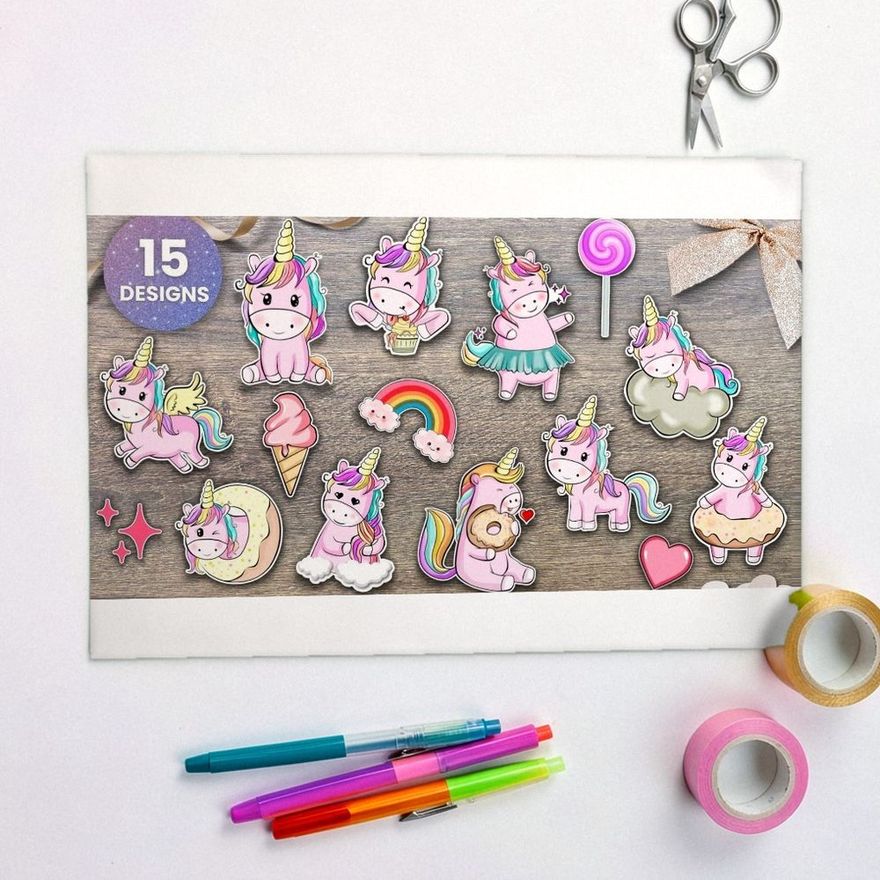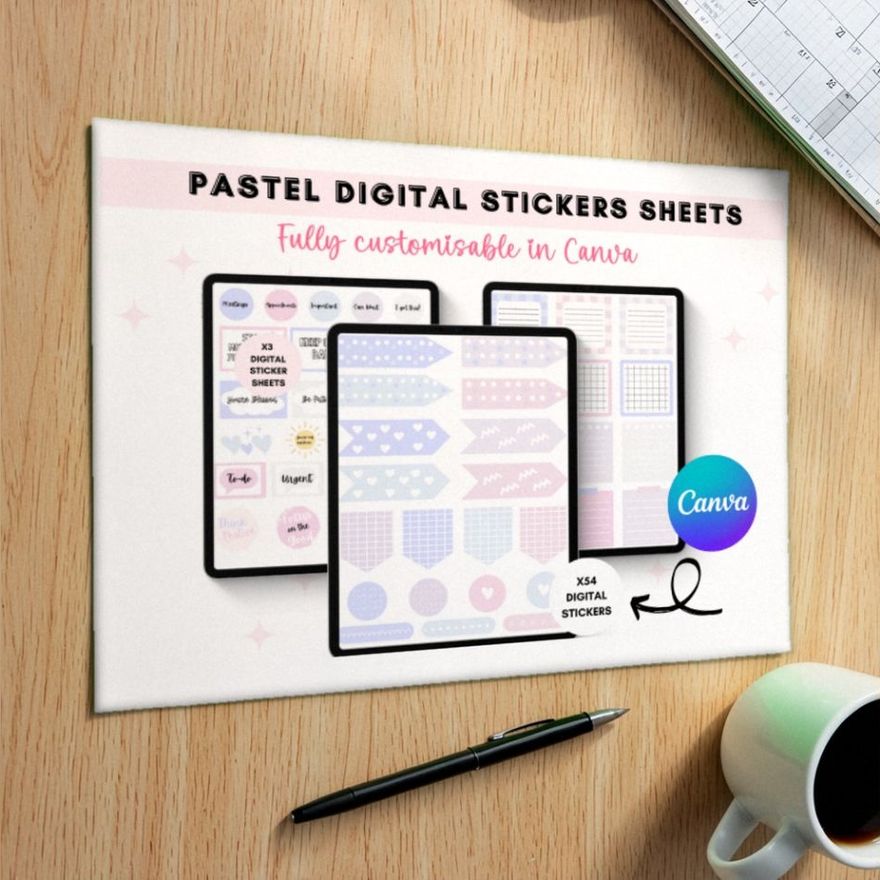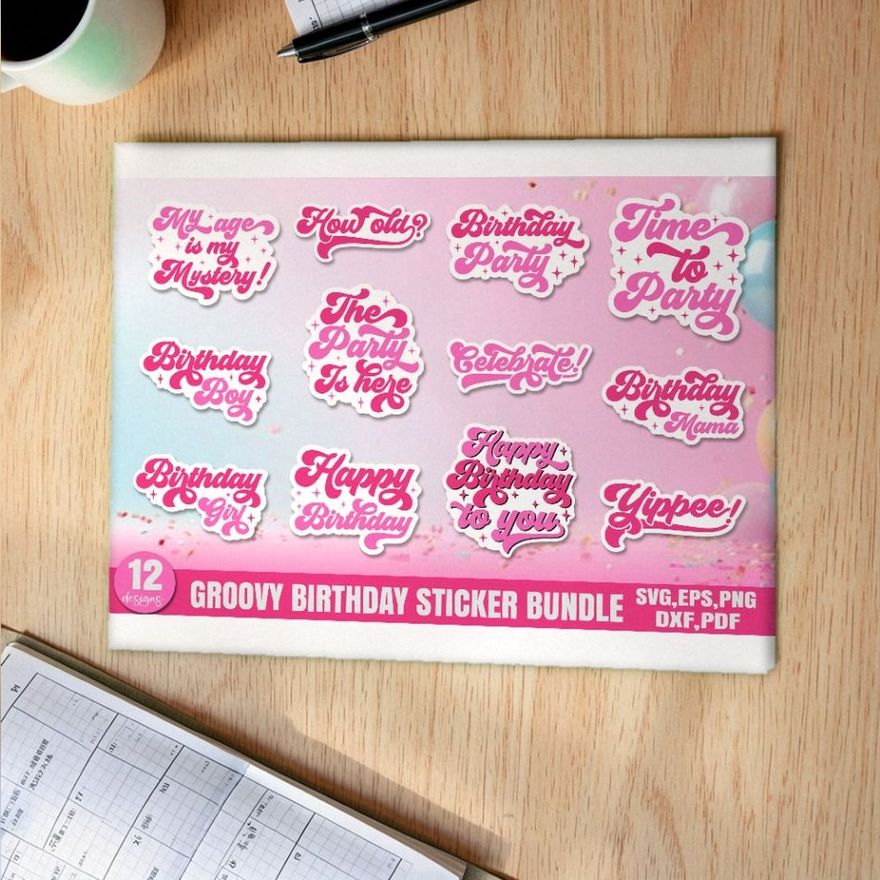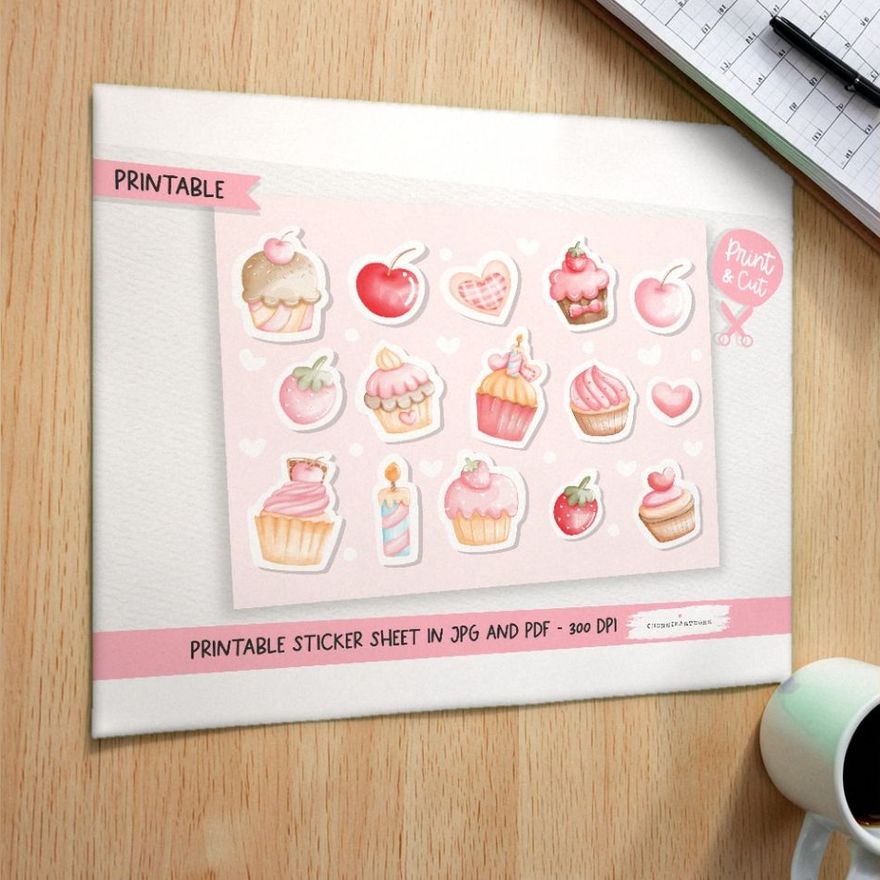
The best sticker paper is the one that matches where the sticker will end up and the printer you own. For planners and journals that is matte paper. For laptops and water bottles it is printable vinyl with a clear laminate on top. Glossy paper suits bright decorative stickers, clear film suits glass, and kraft suits packaging labels. The table below compares all five, and the sections after it explain the trade-offs.
Free Sheets to Test Your Paper On
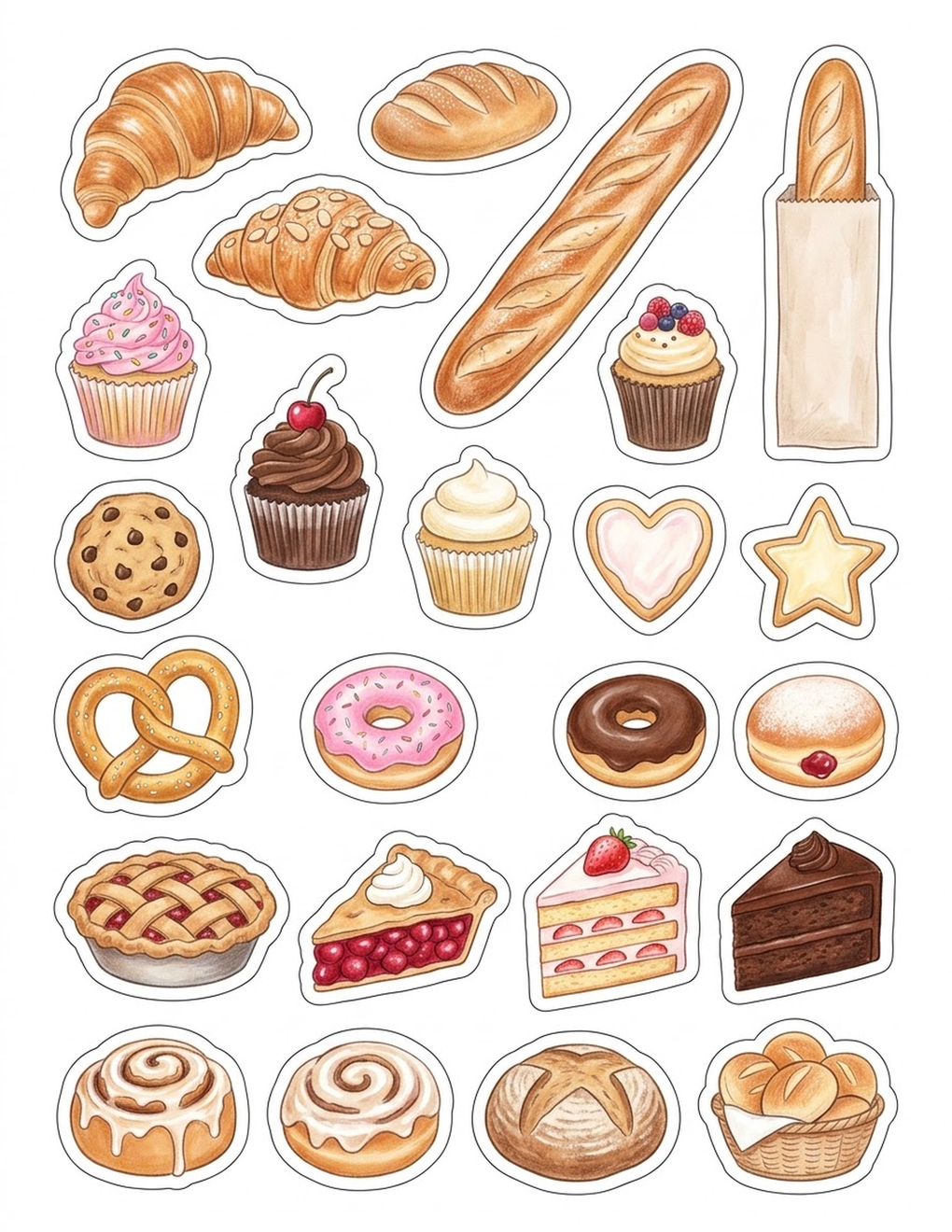
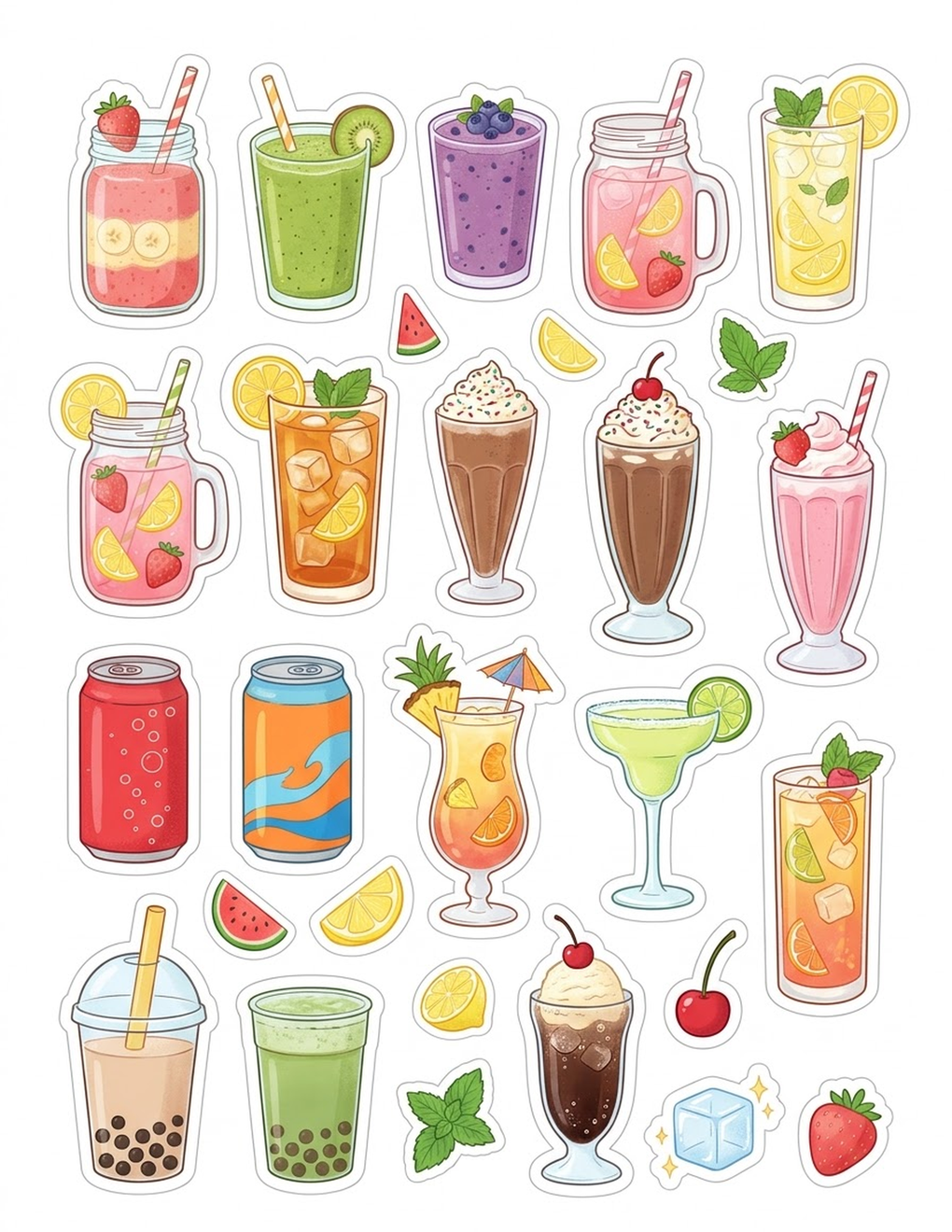
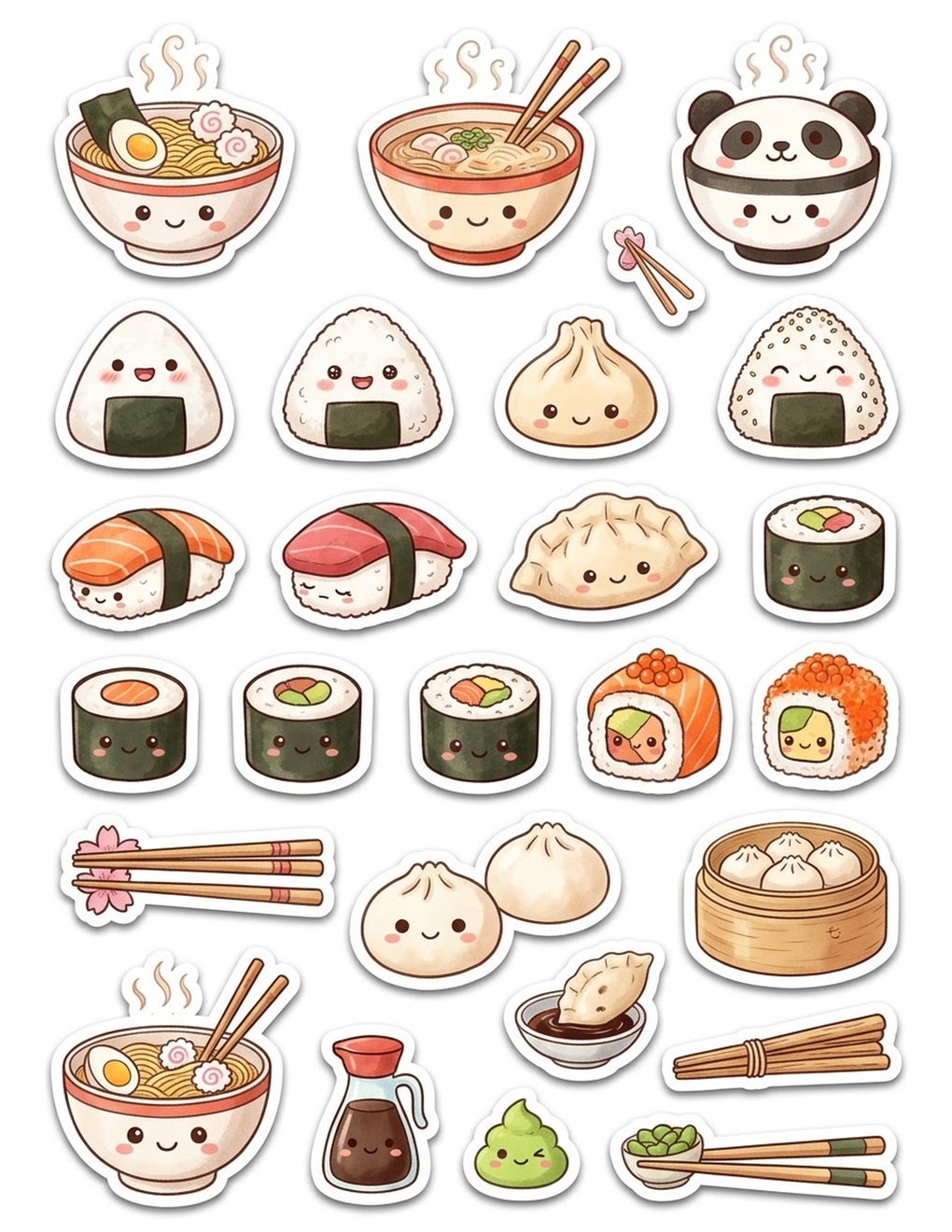
Colors show differences between papers best, so here are six printable food sticker sheets with strong colors: fresh fruit, fast food, bakery, cold drinks, sushi and ramen and cherry cafe. Print the same sheet on two papers and compare the colors and the edges.
Download all 6 pages in one PDFOne PDF of 6 pages. Four food sticker sheets to print.



How Sticker Paper Is Built
Every sheet has three layers: a face you print on, an adhesive, and a backing liner that peels away. The liner is paper or film with a thin silicone coating, which is why the adhesive lets go of it cleanly. The face decides how the sticker looks and how long it lasts. It is either paper (matte, glossy, kraft) or a plastic film (vinyl, clear).
The adhesive is either permanent or removable. Permanent adhesive grips harder over time and is right for labels and laptops. Removable adhesive peels off cleanly and lets you reposition a sticker, which is what you want in a planner. The pack states which one you are buying; if it says nothing, assume permanent. Cricut's printable sticker paper and printable vinyl, for example, are both permanent.
Some liners have slits across the back so you can crack them open to peel. That helps with hand-cut stickers. For machine-cut sticker sheets, an unbroken liner is the better choice, because it keeps the sheet in one piece.
The Five Types Side by Side
| Type | Look | Durability | Water | Best for |
|---|---|---|---|---|
| Matte paper | Flat, no glare, takes pen and pencil | Tears and scuffs like paper | None: ink and paper both suffer | Planners, journals, labels you write on |
| Glossy paper | Shiny, saturated color | Light scuff resistance, still paper | A stray splash at most | Decorative and photo stickers |
| Printable vinyl | Smooth film, matte or glossy | Does not tear, flexes over curves | Film resists water; a dye inkjet print still needs laminate | Laptops, bottles, phone cases |
| Clear film | See-through, no white | Tough film, shows scratches | Similar to vinyl | Glass jars, windows, light surfaces |
| Kraft paper | Brown, rustic, matte | Like paper | None | Packaging, gift labels, dry-goods jars |
Each type is sold in inkjet and laser versions, and they are not interchangeable. More on that below.
Matte Paper: The Everyday Choice
Matte sticker paper is the default for a reason. It takes ink well, shows no glare, and accepts pen, pencil and highlighter, so you can write on a sticker after it is on the page. Used without laminate it adds little bulk to a journal, and its non-reflective surface is the one cutting machines read printed registration marks on most reliably.
Its weakness is water and wear. A drop of water lifts ordinary inkjet ink, and the paper tears when you try to peel a permanent sticker off a hard surface. Keep it for paper: planner pages, notebooks, envelopes and labels that stay dry.
Planner sheets are the natural match, since they are small, used once and often written on:

Bullet Journal Planner Sticker Sheet
See the listing ↗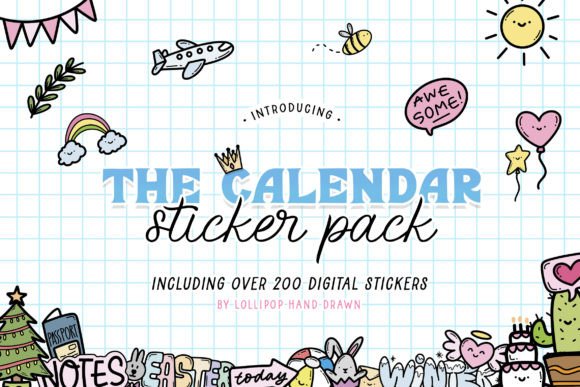
The Calendar Sticker Pack
See the listing ↗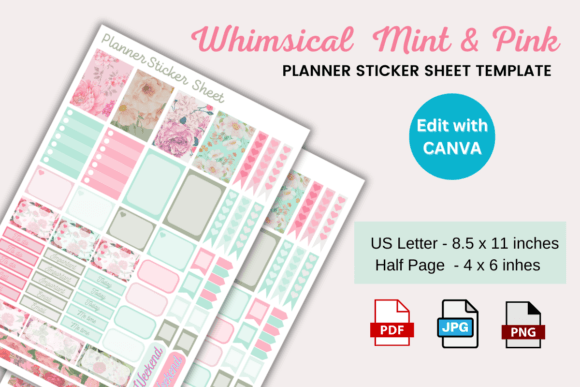
Planner Sticker Sheet Editable Template
See the listing ↗From the collection Sticker Sheets & Bundles. New Creative Fabrica members get 10 free downloads, and any of these can be one of them.
Glossy Paper: Bright Color, Same Paper Underneath
A glossy coating holds ink close to the surface, so colors look deeper and details sharper than on matte. It is a good choice for decorative stickers, photo stickers and anything with strong color.
The trade-offs are practical. Ink dries more slowly and smudges if you stack sheets too soon; Avery's advice for glossy sheets is to feed one at a time and let each dry before handling it. Ballpoint and pencil tend to skip on the surface, so a permanent marker is the safe choice for writing on it. The shine can also confuse the sensor of a cutting machine, a problem covered in the guide to Cricut Print Then Cut stickers.
Gloss is not waterproofing. Under the coating it is still paper, and water gets in at the cut edges.
Printable Vinyl: For Anything That Gets Handled
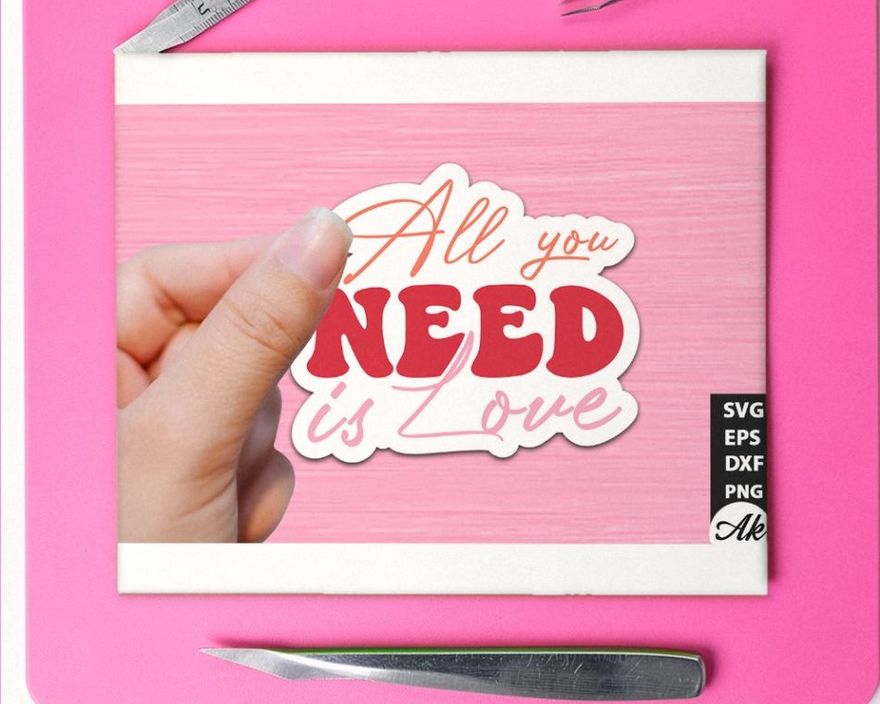
Vinyl sticker paper has a plastic film face instead of paper. It does not tear, it bends around a bottle without creasing, and it survives being rubbed in a bag. It comes in matte and glossy finishes. Thickness depends on the brand more than the material: at one large label supplier, the standard matte paper sheet is listed at 7.5 mil in total and the weatherproof film sheet at 8 mil.
Read the word "waterproof" on a film pack carefully. It usually describes the film. The ink sitting on top is a separate matter, and manufacturers say so in the small print. Avery describes its durable white film labels as waterproof when printed with a laser or a pigment-based inkjet, and only water-resistant to accidental splashes when printed with a standard dye-based inkjet. Online Labels says its weatherproof inkjet film handles light-to-moderate exposure to liquids and may need a protective spray beyond that.
A clear laminate sheet over the print closes that gap and slows fading in sunlight, which is why Cricut sells its waterproof sticker sets as two sheets, a printable vinyl and a laminate. How to make printable stickers waterproof walks through it.
Designs meant for bottles, bags and laptops are the ones worth the extra cost of vinyl:

Water Bottle Stickers
See the listing ↗
Motivation Retro Stickers
See the listing ↗
Summer Vibes Retro Stickers
See the listing ↗From the collection Retro & Y2K Stickers. New Creative Fabrica members get 10 free downloads, and any of these can be one of them.
Clear Sticker Paper: No White, No Background
Clear sticker paper is a transparent film. The appeal is a sticker with no visible background, as if the design were printed on the object.
It comes in two looks: gloss clear is fully transparent, while matte clear is frosted and slightly translucent, and hides fingerprints better.
The catch is that home printers have no white ink or toner. Anything white in the design becomes transparent, and pale colors look faint because the surface behind shows through. Clear film works best with bold, dark or saturated designs on a light surface or on glass. On a black laptop lid, most of the design disappears.
Inkjet prints on clear film dry slowly and scratch easily, because the film is far less absorbent than paper. Choose a photo or glossy paper setting at normal quality so less ink goes down, and let the sheet sit; Online Labels recommends air drying for 24 hours before handling. Laminate if the sticker will be touched often. Apply slowly from one side, because trapped bubbles and fingerprints show through a clear sticker.
Kraft Paper: Labels and Packaging
Kraft sticker paper is brown, uncoated and matte. Printer inks are translucent, so the brown shows through every color: reds turn brick, yellows turn mustard, and white vanishes. Black text and simple line art look best.
Use kraft for package seals, gift labels, and jar labels on dry goods. It behaves like any uncoated paper around water, so keep it away from the sink and the fridge.
Inkjet or Laser, and Which Ink
Check three words on the pack before anything else: inkjet, laser, or both.
- Inkjet paper has an absorbent coating. Put a film or coated inkjet sheet through a laser printer and the heat of the fuser can melt the face or make the adhesive ooze, which risks jams and damage to the printer.
- Laser paper is made to take heat and has no ink coating. In an inkjet, the ink stays wet on the surface and smears.
- Laser-rated film, usually polyester, exists for weatherproof and clear stickers. Ordinary inkjet vinyl must not go through a laser printer; Cricut labels its printable vinyl and sticker paper as inkjet only.
Ink type matters too. Most home inkjets use dye-based color inks, which are vivid but dissolve in water. Some models use pigment inks, which resist water and fading better, and many mix the two: a pigment black with dye colors, which behaves like dye for a color sticker. The specifications on the printer maker's website say which you have.
Laser toner is a fused plastic powder that does not run when wet, though the paper under it still soaks. On smooth film, toner that was not fused well can scratch or flake off, so set the paper type to labels.
Sticker Papers to Compare
A small pack of each type lets you compare them on your own printer. Check every listing for inkjet or laser before you buy.
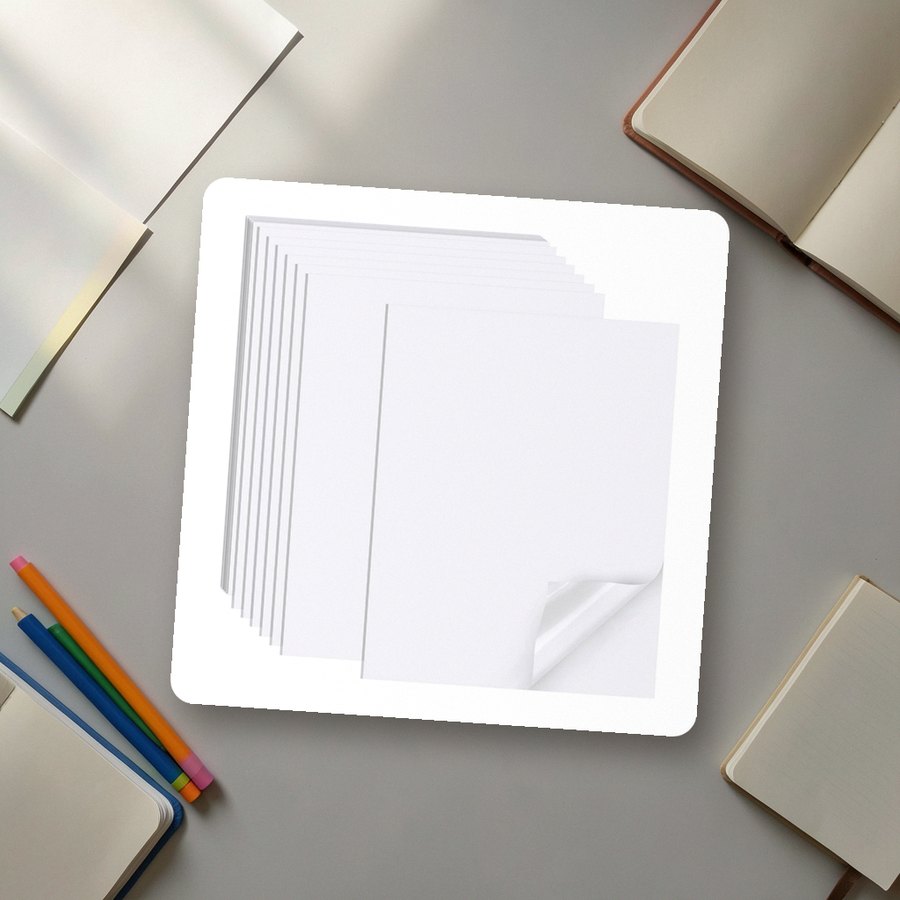 Matte sticker paper for inkjet, letter sizeJoybergSee it on Amazon
 Matte printable vinyl for inkjetJOYEZASee it on Amazon
 Clear printable sticker sheetsCricutSee it on Amazon
 Kraft sticker paper, full sheetsNATURALABELSee it on Amazon
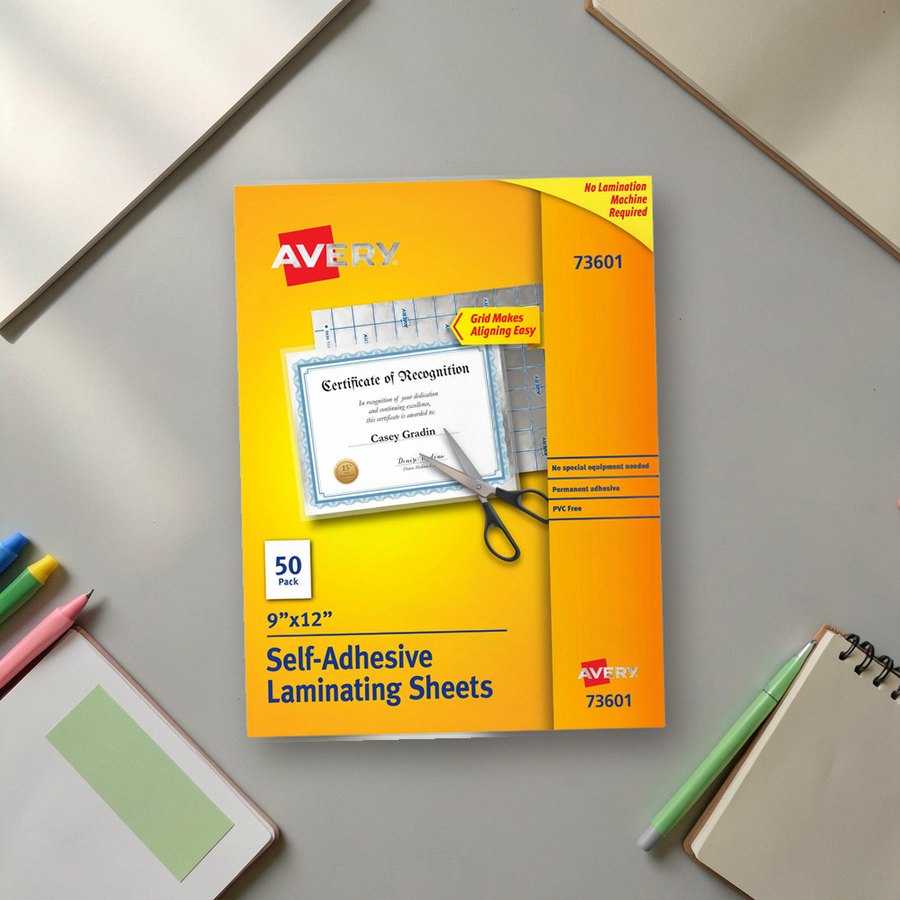 Self-adhesive clear laminating sheetsAverySee it on Amazon
As an Amazon Associate we earn from qualifying purchases.
Which One to Buy First
- For a planner or journal: matte paper, removable adhesive if you can find it.
- For a laptop, bottle or phone case: printable vinyl plus clear laminate sheets.
- For party favors and decorative sheets: glossy paper.
- For glass jars and windows: clear film, with a dark, simple design.
- For shop packaging and gift labels: kraft or matte.
If you are buying one pack to learn on, make it matte paper marked for your printer type. It is the cheapest to make mistakes on, and it covers most uses on paper. The full printing routine is in how to make stickers at home, and the printable stickers collection has designs to try on the first sheet.
Sticker Sets From This Article
 Printable Stickers12 hand-picked · open the collection →
 Sticker Sheets & Bundles11 hand-picked · open the collection →
 Retro & Y2K Stickers21 hand-picked · open the collection →